
How to choose the right gas booster for hydrogen applications
Hydrogen is not just another gas. It is the smallest molecule in existence, highly flammable, with a natural tendency to leak through any discontinuity, and capable of internally degrading the metals it comes into contact with. Choosing a gas booster for hydrogen means considering factors that do not apply to most industrial gases: material compatibility, specific certifications, working pressures tailored to each application and a drive technology that meets the demands of the hydrogen ecosystem.
This article covers the key criteria for making an informed decision, from materials science to mandatory certifications in Europe, along with the standard pressures for each type of application.
Why hydrogen requires a specific gas booster
When working with gases such as nitrogen or argon, selecting a gas booster primarily comes down to inlet and outlet pressure, flow rate and ambient conditions. With hydrogen, the starting point is entirely different.
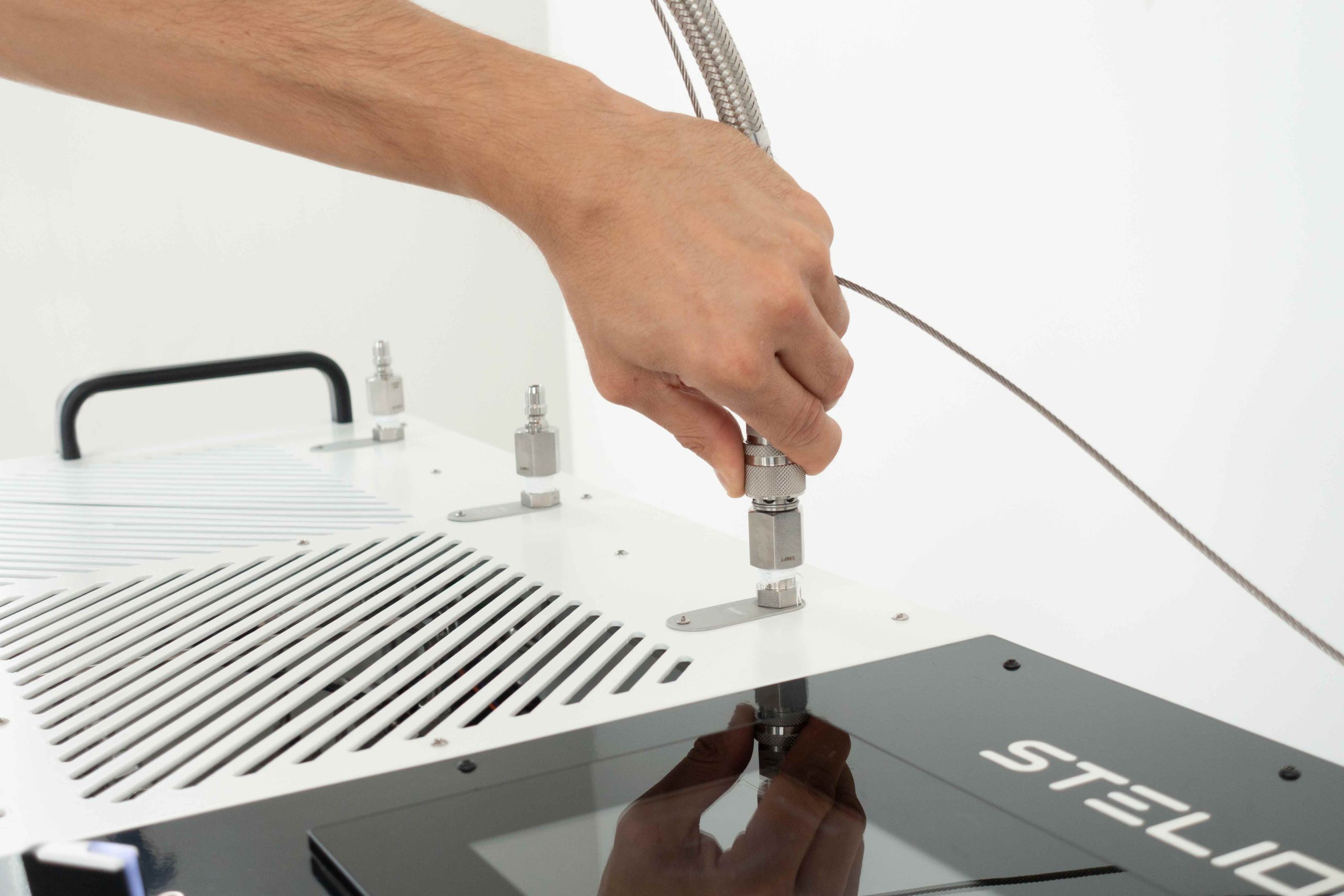
The hydrogen molecule (H2) is extremely small: its kinetic diameter is approximately 0.289 nm, making it significantly more prone to leaking through seals, threads and fittings than any other industrial gas. This requires all gas booster components: seals, valves, seats and fittings, to deliver a level of tightness far beyond what is expected in conventional applications.
But the most critical issue is not leakage. It is what happens inside the metal itself. Hydrogen is capable of penetrating the crystalline structure of certain metals and triggering a phenomenon known as hydrogen embrittlement, which compromises the ductility, toughness and structural reliability of the material. A study published in the Journal of Materials Science identifies this phenomenon as one of the most significant challenges in materials engineering for hydrogen technologies, describing mechanisms such as HELP (Hydrogen Enhanced Local Plasticity) and HEDE (Hydrogen Enhanced Decohesion), through which hydrogen atoms alter the mechanical behaviour of the metal at a microstructural level (Journal of Materials Science (2026), “Mechanisms of hydrogen embrittlement in metals and alloys used in fuel cell applications”).
This means that a gas booster designed for nitrogen or compressed air is not, by default, suitable for hydrogen, even when the working pressures are identical. What determines compatibility is the choice of materials, the design of the sealing system and the certifications behind the equipment, not the pressure rating alone.
Material compatibility: the most important criterion
Material selection is the first filter, and probably the most decisive one, when choosing a gas booster for hydrogen.
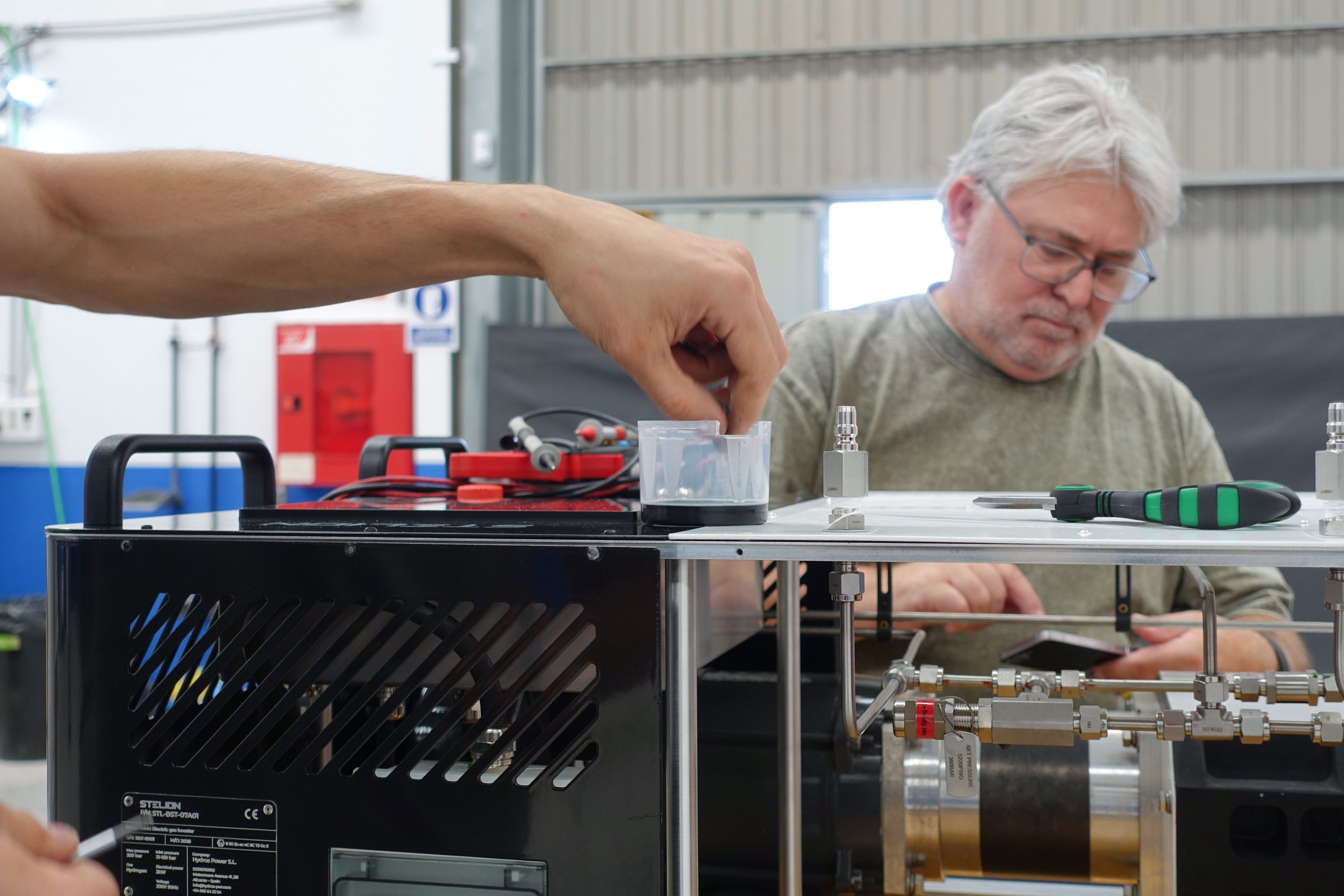
The most commonly used materials in gas booster components intended for hydrogen service include austenitic stainless steels (such as grades 316 and 316L), nickel-based alloys and, for certain components, aluminium. These materials offer greater resistance to hydrogen embrittlement than conventional carbon steels or high-strength martensitic steels, which are particularly susceptible.
The international reference standard for evaluating metallic material compatibility with gases is ISO 11114-1, which establishes the requirements for selecting safe combinations of cylinder and valve materials and gas contents. For gas booster components intended for hydrogen service, part 4 of this standard (ISO 11114-4:2017) specifies the test methods for qualifying steels resistant to hydrogen embrittlement, applicable to cylinders of up to 3,000 litres.
Beyond metals, non-metallic materials such as gaskets, seals and valve seats also require specific selection. ISO 11114-2 provides guidance on evaluating the compatibility of these materials with gas contents, covering elastomers, polymers and composite materials that come into direct contact with hydrogen during operation.
 Stainless steel piping on STELION Booster Station
Working pressures: inlet, outlet and flow rate
Working pressures vary significantly depending on the hydrogen application the gas booster is intended for. Correctly defining the inlet pressure, the target outlet pressure and the required flow rate is essential to size the right equipment.
- Inlet pressure depends on the hydrogen source. If the gas comes from an electrolyser, typical output pressures range between 6 and 30 bar, although some high-pressure electrolysis units can reach 60–80 bar. If it comes from standard commercial cylinders, the starting pressure is usually between 150 and 200 bar. If the gas is supplied from intermediate storage or a tube trailer, pressures can vary between 200 and 500 bar.
- Outlet pressure depends directly on the end application. For intermediate storage or laboratory supply, typical pressures range between 200 and 300 bar. For refueling heavy-duty vehicles, buses and forklifts, the standard is 350 bar. For light-duty passenger vehicles, the target pressure is 700 bar. For hydrogen-powered drones and UAVs, common storage pressures fall between 350 and 700 bar, depending on the onboard tank type (Type III or Type IV).
- Flow rate, in turn, determines the speed of the operation. In laboratory or testing applications, low flow rates may be sufficient. In refueling or large-scale transfer operations, higher flow rates are needed to shorten filling times. The combination of target pressure and flow rate defines the power required from the gas booster and, consequently, its size, energy consumption and cost.
Certifications and regulatory framework in Europe
In Europe, any equipment intended to operate with hydrogen in a potentially explosive environment must comply with ATEX Directive 2014/34/EU, which sets the essential health and safety requirements for equipment and protective systems intended for use in potentially explosive atmospheres.
Hydrogen is classified under gas group IIC in the ATEX framework, which corresponds to gases with the lowest ignition energy and therefore the most demanding in terms of protection. Equipment marked as IIC can also be used in environments with gases from groups IIA and IIB, but not the other way around. This means that a gas booster certified ATEX for gas groups IIA or IIB is not valid for hydrogen without a specific certification.
In addition to ATEX certification, gas boosters intended for hydrogen must comply with CE marking and, depending on the working pressures, with the Pressure Equipment Directive (PED, Directive 2014/68/EU), which governs the design, manufacture and inspection of equipment operating above 0.5 bar.
When evaluating a gas booster for hydrogen, it is important to verify that the equipment holds ATEX certification with IIC classification, complies with the PED for the intended working pressures and carries CE marking in accordance with current European legislation.
Drive technology: pneumatic, hydraulic or electric
The drive technology of a gas booster is far from a secondary criterion when working with hydrogen. Each technology has direct implications for system efficiency, automation capability and the infrastructure required.
- Pneumatic gas boosters have historically been the most common option because the absence of electricity at the point of use eliminated a potential ignition source. However, their energy efficiency is low. In an ecosystem where green hydrogen production already involves significant losses during electrolysis, adding a compression stage with that level of efficiency compounds the overall energy balance problem.
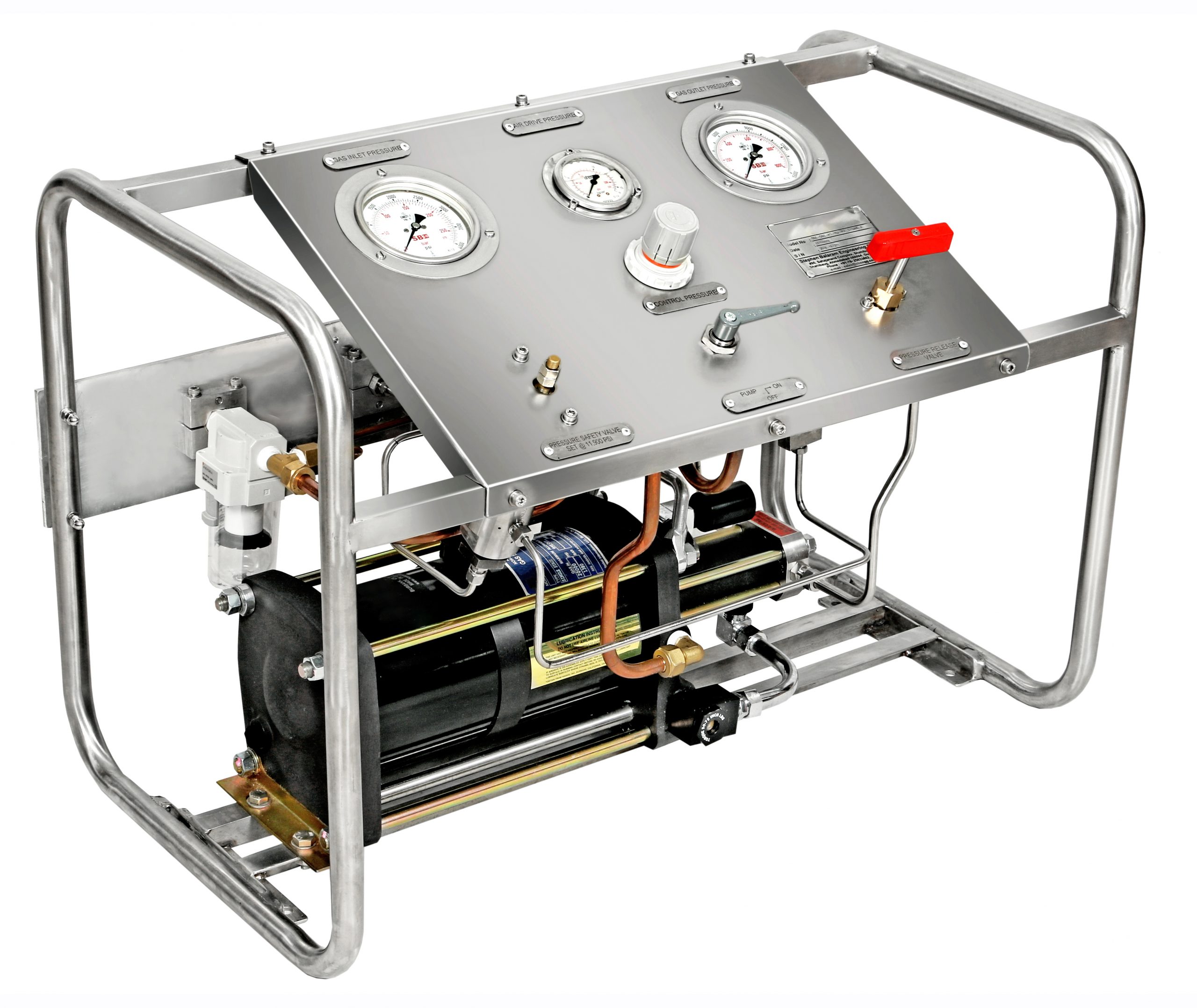
- Hydraulic gas boosters offer higher flow rates and continuous operation, but require complex infrastructure (hydraulic power unit, oil circuit, cooling system) that makes them better suited to large-scale industrial installations than to distributed or smaller-scale applications.
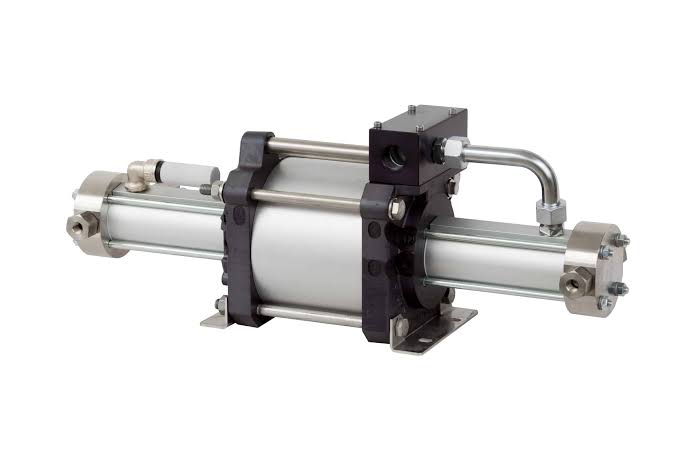
- Electric gas boosters feature a shorter and more efficient energy chain by eliminating the transport losses and leakage paths inherent in pneumatic systems. Additionally, electric drive technology enables the integration of digital control, charging cycle automation and real-time monitoring. A study by Alfred Rufer, researcher at EPFL, specifically describes electric gas boosters as a direct alternative to pneumatic units in hydrogen refueling stations and small-scale storage, precisely because of their greater energy efficiency (Rufer, A. (2023), “Increasing the Energy Efficiency of Gas Boosters for Hydrogen Storage and for Refueling Stations”, Energies, vol. 16, no. 4).

For a detailed comparison between pneumatic and electric technologies, see our article Electric vs pneumatic gas boosters: key differences and how to choose.
Installation environment and operating conditions
The conditions at the installation site influence both the drive technology and the certifications required.
If the equipment is to be installed in an enclosed space or one with limited ventilation, the ATEX zone classification of the location will determine the equipment category required. Spaces where hydrogen may be present continuously or frequently (zone 0) require Category 1G equipment, the most demanding level. Spaces where hydrogen is likely to be present under normal conditions (zone 1) require Category 2G, and spaces where hydrogen is only expected to be present occasionally and for short periods (zone 2) allow Category 3G equipment.
Ambient temperature also affects equipment performance and certification requirements. ATEX temperature classes (T1 to T6) define the maximum surface temperature of the equipment, which must not exceed the auto-ignition temperature of the gas. Hydrogen has an auto-ignition temperature of approximately 560 °C, which allows for relatively broad temperature classes, but this parameter should always be verified in the equipment documentation.
Other factors to consider include the availability of electrical supply (which will determine whether an electric booster is viable or whether a pneumatic unit with an air compressor is needed), the space available for installation (electric boosters tend to be more compact as they do not require compressed air infrastructure) and access conditions for maintenance.
Key questions before choosing a gas booster for hydrogen
Before contacting a supplier, it is worth having clear answers to the following questions:
- What inlet pressure does a gas booster for hydrogen need? This depends on the supply source: electrolyser, commercial cylinder or intermediate storage. This data point defines the inlet pressure of the equipment.
- What outlet pressure does my hydrogen application require? The target pressure varies by use case: 200–300 bar for laboratories, 350 bar for heavy-duty vehicles, 700 bar for light-duty vehicles, 350–700 bar for drones and UAVs. This parameter, together with the inlet pressure, determines the required compression ratio.
- What flow rate does a hydrogen gas booster need? Filling and refueling times depend directly on this parameter. Supplying hydrogen to a laboratory is not the same as refueling a vehicle.
- What certifications does a gas booster for hydrogen need in Europe? ATEX IIC, PED and CE marking are the mandatory minimum. Without these certifications, the equipment cannot be legally installed in a hydrogen project in Europe.
- In which ATEX zone will the gas booster be installed? The zone classification of the installation site (Zone 0, 1 or 2) will determine the required equipment category and therefore the available options.
- Pneumatic or electric gas booster for hydrogen? If the equipment needs to operate autonomously, with energy consumption monitoring or process traceability, an electric gas booster with integrated digital control will be the most suitable option.
- What technical support does the gas booster manufacturer offer in Europe? The proximity of technical support can be decisive in minimizing operational downtime.
Having these answers before starting the selection process allows the supplier to correctly size the equipment and avoids errors that can prove costly, both in time and in safety.
A solution that already meets these requirements
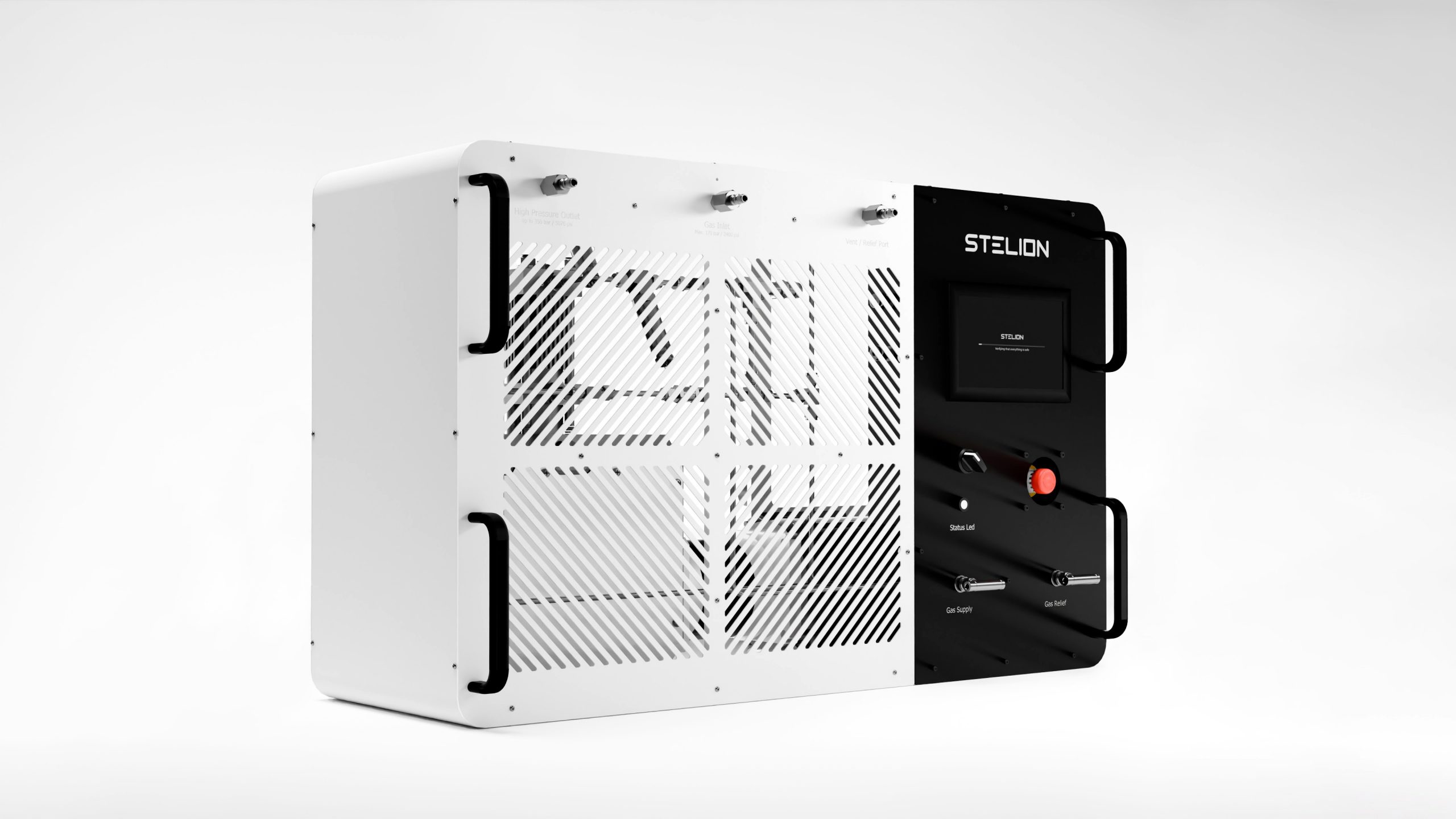
STELION Booster Station, developed by Hydros Power, has been designed from the ground up to operate with hydrogen (and other gases), integrating compatible materials, European certification, ATEX compliance and an electric architecture that incorporates digital pressure control, automatic charging mode, energy monitoring and error management.
It is a gas booster pump that meets the criteria described in this article as standard, ready for laboratory applications, light vehicle, drone and UAV refueling, fuel cell testing and hydrogen solution deployment in locations where conventional infrastructure proves too slow and costly.
If you want to explore how it fits your project, learn more about its specifications and applications on the product page.
Recent articles

Press contact
For press inquiries or additional information about Hydros Power and its hydrogen solutions, you can contact the team at:
Guillermo Megías Collado
guillermo.megias@hydros-pwr.com
+34 865 642 254