
Hydrogen Refueling for Drones and UAVs: Challenges and Solutions
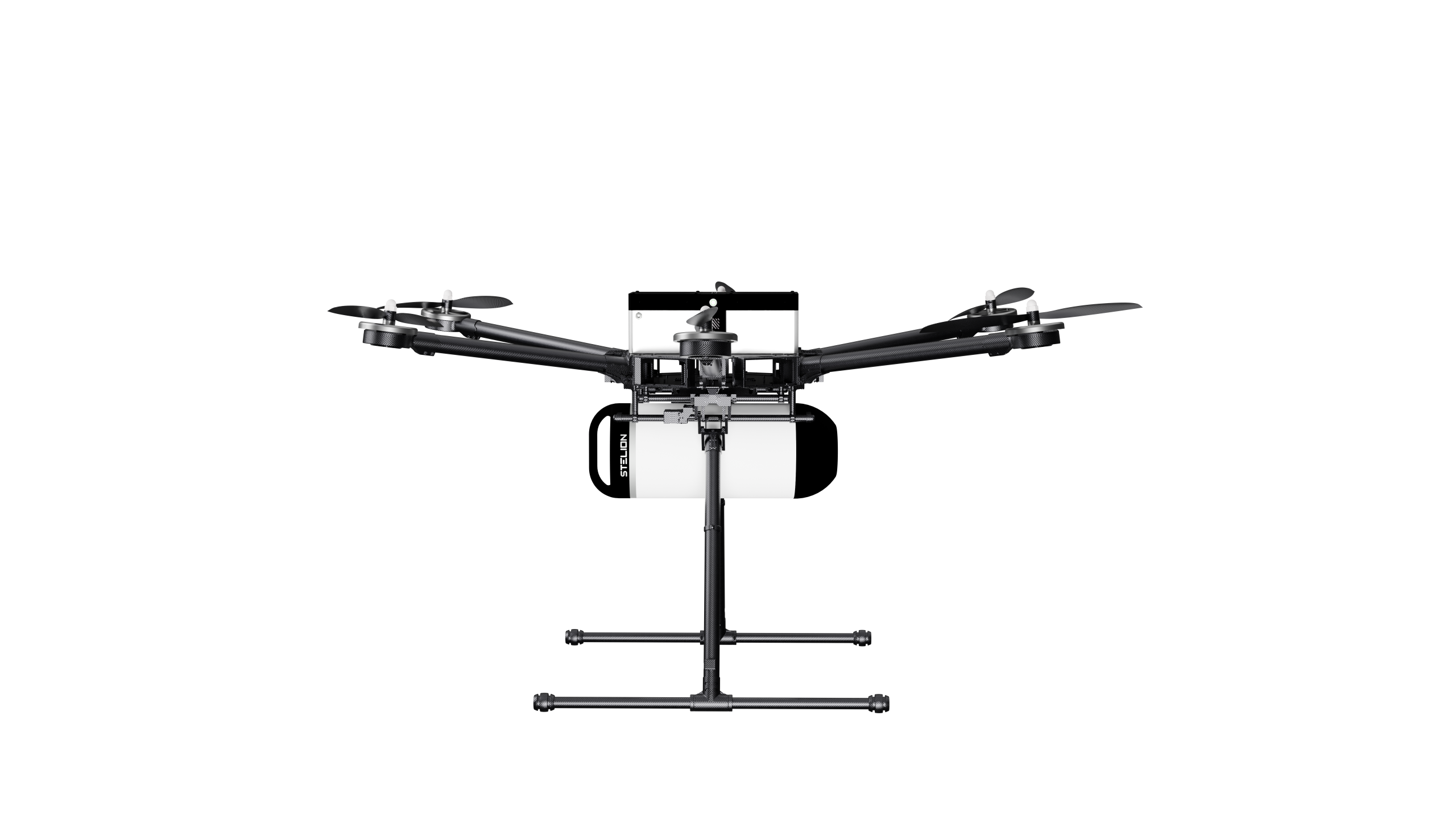
Hydrogen fuel cell powered drones and UAVs are opening up new possibilities in applications where flight endurance is critical. Infrastructure inspection, surveillance, emergency response, maritime operations, and missions in remote areas may require flight times that are difficult to achieve with battery-only systems.
In recent years, hydrogen powered drones have significantly extended flight endurance compared with battery only configurations, in some cases increasing it by three to ten times and enabling missions lasting hours rather than minutes.
However, longer flight times solve only part of the problem. Once the hydrogen is depleted, a much more practical question arises: how do you refuel a hydrogen powered drone?
Why hydrogen drones need a different refueling system
A conventional electric drone, or unmanned aerial vehicle (UAV), needs to recharge its battery, a process that can take anywhere from 30 minutes to several hours. A hydrogen powered drone, by contrast, is refueled by filling its compressed gas tank, a process that can be completed in just a few minutes.
This difference is one of the main operational advantages of hydrogen over batteries. It reduces energy related downtime during field operations. Instead of planning missions around charging queues or battery rotations, operators can keep the drone in the air for longer and restore its energy supply in a single short stop.
In long-range inspection missions or continuous surveillance operations, where every landing introduces recovery zone constraints and additional downtime, rapid hydrogen drone refueling can translate directly into more operating hours per day.
However, that same speed also introduces the main challenge. Unlike recharging a battery, hydrogen refueling involves handling pressurized gas, which places much stricter requirements on material compatibility, sealing, leak prevention, and safe connection and disconnection procedures.
How is hydrogen stored in a UAV?
Most operational hydrogen-powered drones store hydrogen in high pressure composite cylinders, typically Type III, with a metal liner, or Type IV, with a polymer liner. These tanks use lightweight materials such as carbon fiber to minimize onboard weight. Typical storage pressures are around 350 bar, although some configurations operate at higher pressures to maximize flight endurance.
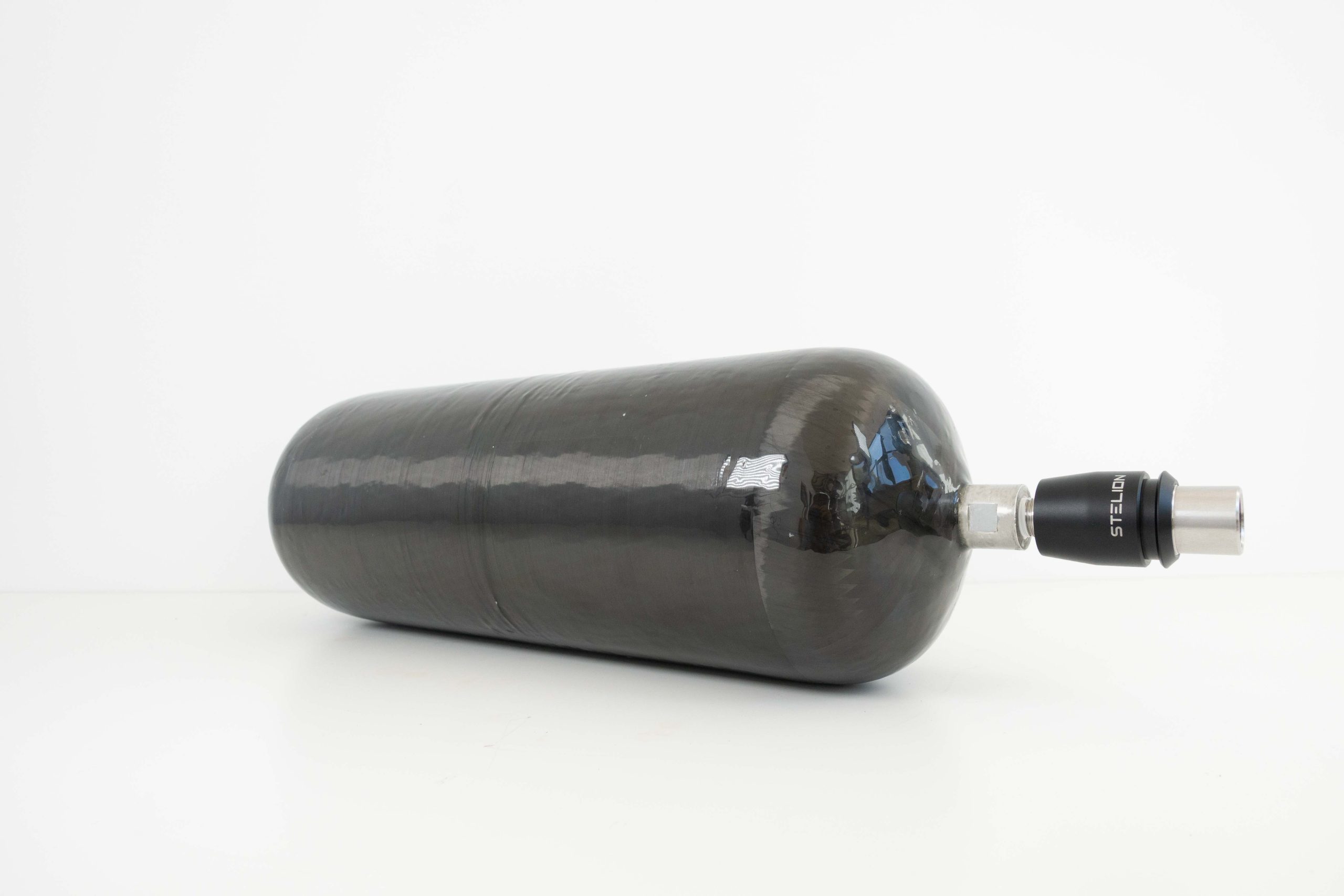
Type IV hydrogen cylinder for high-pressure hydrogen storage
The combination of hydrogen’s low density under standard conditions and the strict weight constraints of a UAV creates a major challenge for hydrogen storage for drones: carrying enough hydrogen to complete the mission without compromising payload capacity or the aerodynamics of the aircraft. This low density is precisely why hydrogen needs to be compressed. By increasing the pressure inside the cylinder, significantly more energy can be stored within the same volume, making it possible to carry enough hydrogen on board without adding excessive weight.
Thanks to this compression, a single fill can provide enough energy for missions lasting several hours, making hydrogen particularly suitable for infrastructure inspection, surveillance, emergency response, and operations in remote areas where frequently returning to base is not a practical option.
But how is hydrogen compressed, and more importantly, how can it be done far from an industrial facility?
Main challenges of hydrogen UAV refueling
Unlike hydrogen road vehicles, which are typically refueled at fixed stations with dedicated infrastructure, hydrogen drone refueling often takes place in temporary field environments where dedicated refueling infrastructure is not available.
Li et al. (2026), in their review “Hydrogen-powered UAVs: A systematic review of technological advancements, safety frameworks, and future prospects,” report that most hydrogen-powered UAVs are refueled using portable high-pressure cylinders or compact mobile units rather than fixed hydrogen refueling stations. According to the same study, these field setups often lack reliable grounding, forced ventilation, and adequate operator protection, increasing the risk of ignition during gas connection, transfer, and disconnection.
Another challenge is the limited availability of regulations specifically developed for hydrogen drone refueling. Most existing regulatory frameworks have been adapted from standards originally designed for other sectors, and only a few countries have developed dedicated guidelines. Japan, for example, published specific safety guidelines in 2020 for the use of high pressure gases in fuel cell powered drones, defining the responsibilities of manufacturers and operators for tank handling and operating procedures.
The third challenge is more practical: the need for compact and portable equipment. A conventional hydrogen refueling station designed for road vehicles is too large, heavy, and dependent on fixed infrastructure to be deployed efficiently in drone field operations.
The compression and transfer equipment must therefore be easy to transport, quick to set up, and capable of operating without relying on an industrial power supply or a permanent compressed-air line.
Hydrogen refueling solutions for drones and UAVs
To address these challenges, the industry has mainly developed two complementary approaches for refueling hydrogen-powered drones outside fixed facilities.
The first is the use of interchangeable cylinders or capsules. Instead of refilling the drone’s tank, the empty cylinder is replaced with a pre-filled one while the depleted unit is refilled separately. This approach minimizes aircraft downtime and is particularly effective in operations involving multiple drones or continuous missions, where cylinder rotation can keep the fleet operating with very limited interruptions.
The second approach is on-site refueling using portable compression equipment. This is where a gas booster pump comes into play. A gas booster takes hydrogen from an already pressurized source, such as a supply cylinder, and increases its pressure to the level required by the drone’s tank, without the need for a conventional hydrogen refueling station. Compared with an industrial compressor, a gas booster pump can be significantly more compact, as it does not need to compress hydrogen from near atmospheric pressure and can reach the required operating pressures, typically within the 350-700 bar range depending on the application, with a much smaller system footprint.
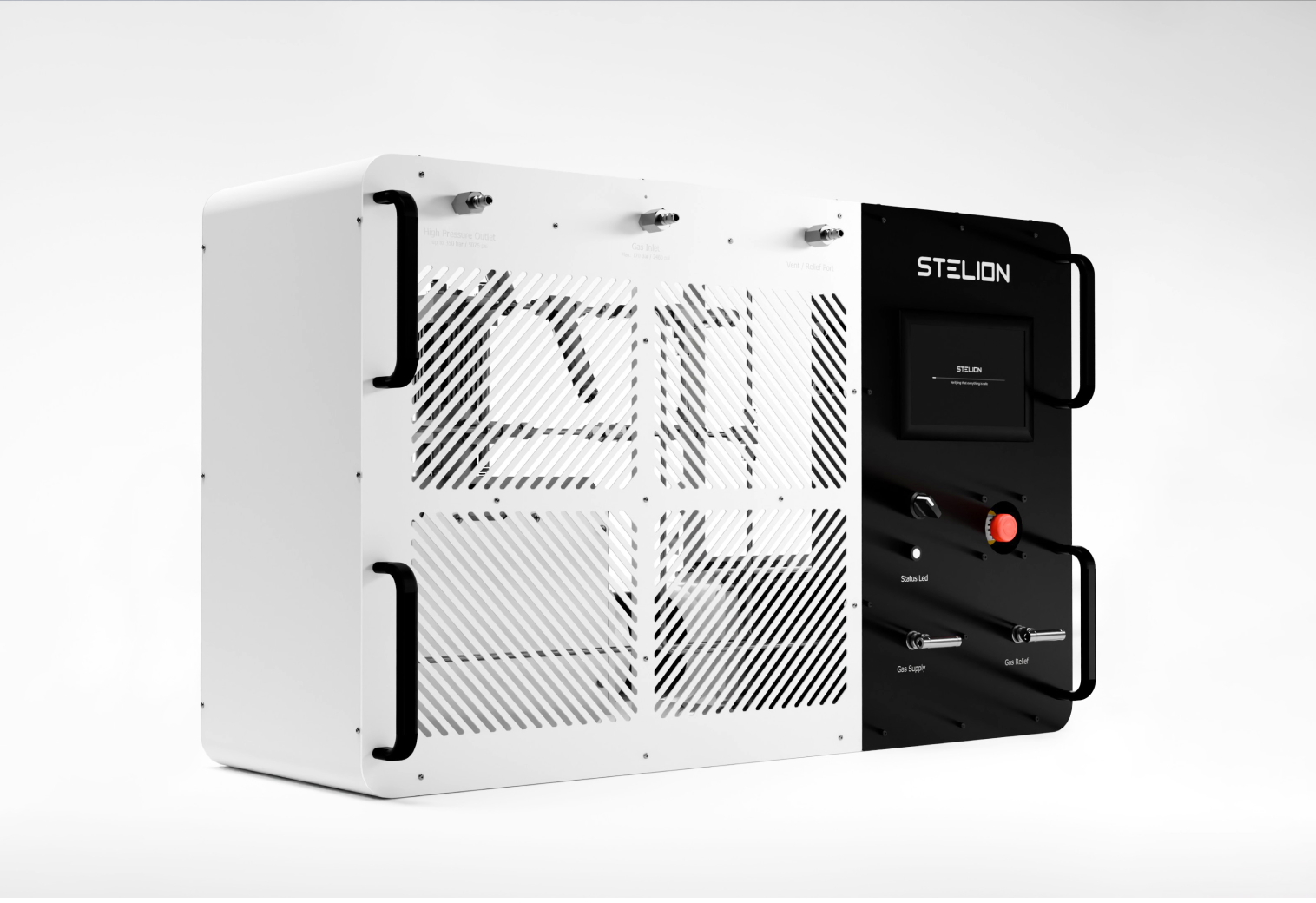
STELION Booster station-Electric Gas Booster Pump
These two approaches are not mutually exclusive. In many operations, interchangeable capsules provide flight continuity, while the gas booster pump is used to refill those capsules or cylinders directly at the operating site.
You can learn more about the different drive technologies used in these systems in our article Electric vs. Pneumatic Gas Boosters: Key Differences and How to Choose.
What should a hydrogen refueling system for drones include?
Not every gas booster pump is suitable for this application. Given the conditions of field operations and the risks identified in the technical literature, a hydrogen refueling system designed for drones should meet several key requirements.
- ATEX compliance. Even if the equipment is not intended to operate in a classified area, compliance with ATEX requirements is highly recommended, as hydrogen belongs to gas group IIC, the most demanding group in terms of ignition energy.
- Hydrogen-compatible materials. The system should be manufactured using materials resistant to hydrogen embrittlement and include a sealing system designed to minimize the risk of leakage during connection and disconnection.
- Portability. Many drone operations take place far from permanent infrastructure, so the gas booster pump should be compact, transportable, and capable of operating without relying on a fixed industrial installation.
- Digital control and traceability. Whenever possible, the system should incorporate digital pressure control and process traceability, allowing operators to verify that each refueling cycle has been completed correctly. This is particularly important in security, inspection, and other critical missions where an in flight UAV failure is not an acceptable outcome.
One example is STELION Booster Station, a compact electric gas booster pump developed by Hydros Power specifically to address these requirements. It features European CE certification, ATEX compliance, digital pressure control, and an advanced error management system, making it suitable for off-grid environments where dedicated refueling infrastructure is not available.
If you want to explore the technical criteria involved in selecting this type of equipment, you can read our article How to Choose the Right Gas Booster for Hydrogen Applications.
In summary
Hydrogen addresses the flight endurance limitations of conventional battery-powered drones. But that advantage only translates into real operational value if refueling can be carried out safely and reliably in the field.
As hydrogen-powered drones continue to move toward wider commercial deployment, the availability of compact, certified, and reliable hydrogen drone refueling systems will become just as important as flight endurance itself.
If you are evaluating how to integrate hydrogen into your drone or UAV operations, you can learn more about STELION Booster Station on its product page.
Recent articles

Press contact
For press inquiries or additional information about Hydros Power and its hydrogen solutions, you can contact the team at:
Guillermo Megías Collado
guillermo.megias@hydros-pwr.com
+34 865 642 254